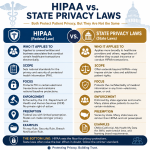
HIPAA itself does not provide individuals with a “private right of action,” meaning patients generally cannot sue a Covered Entity or Business Associate directly under HIPAA for a violation. Enforcement authority belongs to the U.S. Department of Health and Human Services Office for Civil Rights (OCR), which investigates complaints and may impose corrective actions, settlements, or civil monetary penalties.
Class Action vs HIPAA
However, while patients may not sue “under HIPAA,” class action lawsuits are becoming more prevalent following healthcare data breaches or privacy incidents. Plaintiffs’ attorneys often use alleged HIPAA failures as evidence of negligence, inadequate security practices, breach of fiduciary duty, or violations of state consumer protection and privacy laws. In many cases, lawsuits focus on claims such as emotional distress, identity theft risk, financial harm, or failure to properly safeguard sensitive information. As healthcare breaches continue to increase and state privacy laws expand, organizations are facing growing litigation exposure even when OCR does not issue a HIPAA fine.
Class Action Lawsuits
For example, American Multispecialty Group, which does business as Esse Health, a Missouri-based independent physician group serving the greater St. Louis area, experienced a cyberattack and data breach in April 2025. Following the incident, Esse Health became the target of multiple class action lawsuits related to the breach. Those lawsuits were later consolidated, and the organization recently agreed to a $2,525,000 settlement to resolve the claims.
Other class action lawsuits include Ascension, BJC Healthcare, HCA Healthcare, Hypertension Nephology Associates, and Shields Heath Care Group that settled for $15,300,000.
These lawsuits commonly allege:
- Failure to conduct an accurate and thorough risk analysis
- Failure to implement reasonable security safeguards
- Negligent cybersecurity practices
- Delayed breach notification
- Failure to properly monitor systems
- Increased risk of identity theft and medical fraud
This trend demonstrates that even though HIPAA itself does not create a private right of action, plaintiffs are increasingly using state negligence laws, consumer protection laws, breach of implied contract claims, and privacy torts to pursue class action litigation after healthcare data breaches.
Protect Your Organization Before It’s Too Late
HIPAA compliance isn’t a one-time project, it’s an ongoing process. At Aris Medical Solutions, our HIPAA Keeper™ system simplifies compliance with a cloud-based platform that walks you through each requirement, step by step. From risk analysis to training and documentation, you’ll have everything you need to stay protected, compliant, and audit ready.

Protect your practice — and your patients.
Schedule a free HIPAA checkup today at Aris Medical Solutions. Your HIPAA Compliance Officer will have a HIPAA security analyst to guide and assist them every step of the way.