New cybersecurity statistics reveal why healthcare organizations must strengthen their security safeguards.
Cybercriminals continue to target healthcare organizations, regardless of their size. Small medical practices, dental offices, and business associates face many of the same threats as larger healthcare systems.
The 2026 Verizon Data Breach Investigations Report highlights growing cybersecurity risks and the importance of basic security safeguards. The report analyzed more than 31,000 security incidents and 22,000 confirmed data breaches worldwide. These findings demonstrate why healthcare organizations must take cybersecurity seriously.
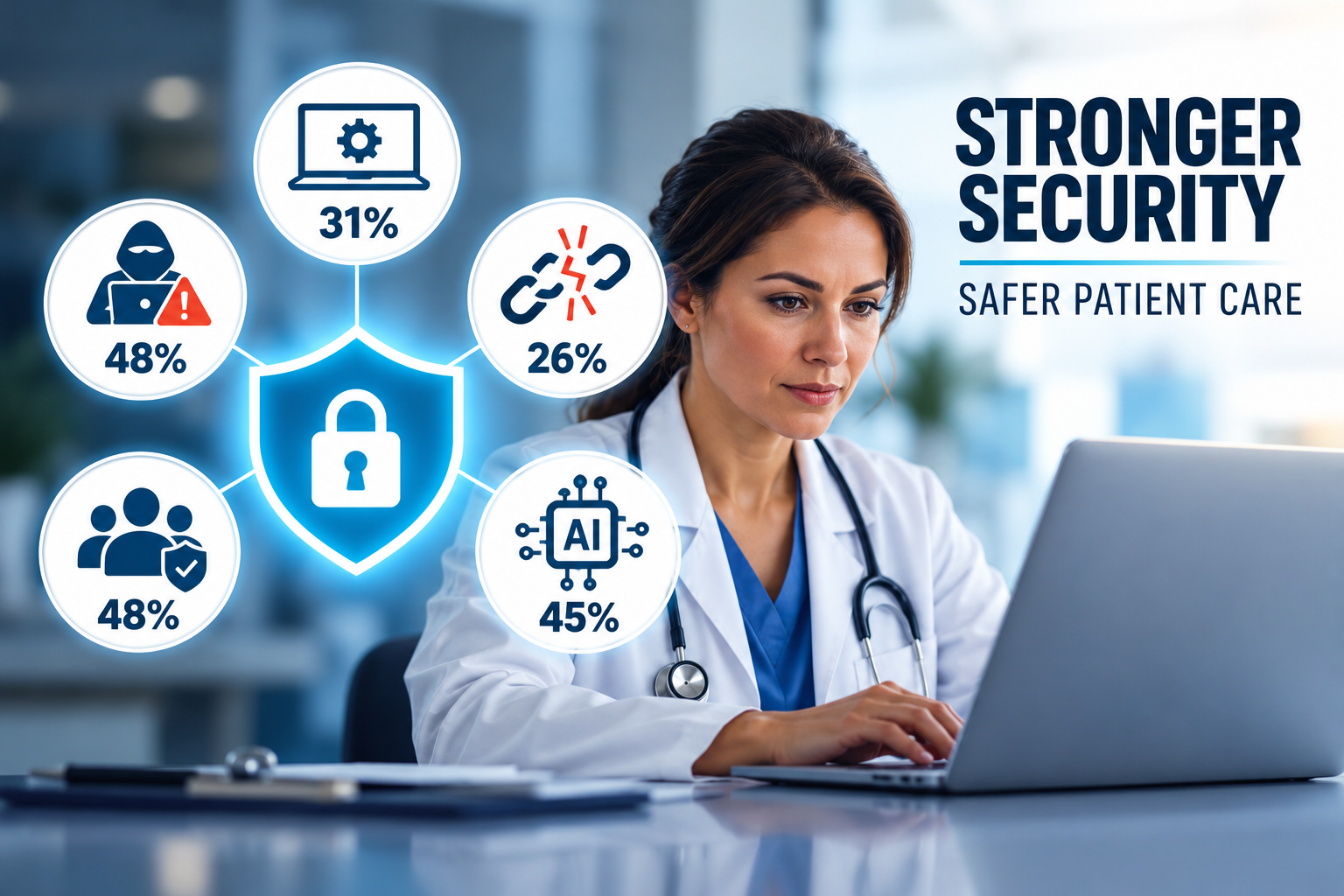
31% of Data Breaches Begin with Exploited Vulnerabilities
Cybercriminals frequently exploit weaknesses in software, networks, and security configurations. Verizon reports that vulnerability exploitation accounted for 31% of breaches in its 2026 analysis. This finding reinforces the importance of identifying and correcting security weaknesses before attackers exploit them. Healthcare organizations should conduct regular vulnerability assessments, install security patches, and review system configurations. However, vulnerability assessments alone do not satisfy HIPAA’s Security Risk Analysis requirements. Organizations must evaluate threats, vulnerabilities, existing safeguards, and potential risks to patient information. A comprehensive HIPAA Security Risk Analysis helps organizations identify risks to electronic Protected Health Information (ePHI).
48% of Data Breaches Involve Ransomware
Ransomware remains one of the most serious cybersecurity threats facing healthcare organizations. Verizon found ransomware involvement in 48% of confirmed breaches analyzed in its 2026 report. These attacks can encrypt medical records, interrupt patient care, and disrupt daily operations. Healthcare organizations must prepare for more than restoring computer systems. They need documented contingency plans that address emergency operations, data recovery, and system restoration. Regular backups, recovery testing, and employee training help organizations prepare for ransomware attacks. A disaster recovery plan should identify critical systems, recovery priorities, and responsible personnel. A written plan provides little protection unless the organization tests it and maintains it.
Only 26% of Known Exploited Vulnerabilities Were Fully Remediated
Identifying security weaknesses represents only the first step toward protecting patient information. Verizon reported that organizations fully remediated only 26% of tracked, known exploited vulnerabilities during 2025. The median time to resolve these vulnerabilities increased from 32 days to 43 days. These findings highlight a dangerous gap between identifying security risks and correcting them. Medical practices should maintain documented procedures for identifying, prioritizing, and correcting security vulnerabilities.
A Risk Management Plan helps organizations assign responsibilities, establish deadlines, and track corrective actions. HIPAA compliance requires organizations to address identified risks, not simply document their existence.
48% of Data Breaches Involve Third Parties
Healthcare organizations depend on outside vendors to manage technology, billing, records, and other essential services. Unfortunately, these relationships can introduce additional cybersecurity risks. Verizon found that third parties played a role in 48% of breaches analyzed in its 2026 report. Third-party breach involvement also increased significantly compared with the previous reporting period. Medical practices should evaluate the security practices of vendors that access, process, or store patient information.
A signed Business Associate Agreement establishes important legal responsibilities, but it does not guarantee adequate cybersecurity protection. Organizations should review vendor safeguards, incident reporting procedures, access controls, and subcontractor relationships. Regular vendor oversight helps identify weaknesses before they expose patient information.
Artificial Intelligence Creates New Security Challenges
Artificial intelligence offers healthcare organizations opportunities to improve efficiency and streamline administrative tasks. However, unauthorized AI tools can introduce significant privacy and security risks. Verizon reported that regular employee AI use on corporate devices increased from 15% to 45%. This figure includes authorized and unauthorized AI use. The report also identified unauthorized AI activity as a growing source of potential data exposure. Employees may unknowingly expose confidential information by entering sensitive data into unapproved AI applications. Healthcare organizations should establish clear AI policies and train employees on acceptable use. They should also evaluate AI vendors before allowing access to patient information. When applicable, organizations must obtain Business Associate Agreements and implement appropriate safeguards.
Basic Cybersecurity Safeguards Make a Difference
Healthcare organizations do not need to wait for a cyberattack to strengthen their defenses. They can reduce cybersecurity risks by implementing and maintaining essential safeguards.
These safeguards include:
- Conducting comprehensive Security Risk Analyses.
- Developing and updating Risk Management Plans.
- Maintaining an asset list and include how data flows through your network.
- Performing vulnerability assessments and applying security patches.
- Implementing multifactor authentication and appropriate encryption.
- Maintaining secure system configurations and access controls.
- Training employees to recognize phishing and other cyber threats.
- Reviewing Business Associate and vendor security practices.
- Developing and testing contingency and disaster recovery plans.
- Monitoring system activity and investigating suspicious behavior.
- Establishing policies for artificial intelligence and sensitive information.
These actions help organizations protect patient information and maintain essential healthcare operations.
HIPAA Compliance Is More Than Checking a Box
Many healthcare organizations mistakenly believe that purchasing cybersecurity software satisfies their HIPAA obligations. However, technology represents only one component of an effective HIPAA compliance program. Organizations must also establish policies, train employees, evaluate risks, and document corrective actions.
A comprehensive compliance program combines administrative, physical, and technical safeguards. The HIPAA Security Rule requires covered entities and business associates to protect electronic patient information. These requirements apply regardless of an organization’s size.
Small practices cannot assume that cybercriminals will overlook them.
The Bottom Line: Prevention Costs Less Than Recovery
A cybersecurity incident can create significant financial, operational, and reputational consequences. Medical practices may face business interruptions, recovery expenses, regulatory investigations, and damaged patient trust.
Although no security program can eliminate every threat, proactive safeguards can significantly reduce risks. Healthcare organizations should focus on preventing incidents while preparing to respond when something goes wrong.
Protecting patient information is not a one-time project. It requires continuous attention, documented safeguards, and ongoing risk management.
The question is not whether your organization can afford cybersecurity.
The question is whether your organization can afford the consequences of inadequate protection.
When was the last time your organization updated its HIPAA security risk analysis?
At Aris Medical Solutions, our HIPAA Keeper™ cloud-based platform makes HIPAA compliance simple. It guides your organization through every requirement with a clear, step-by-step process. From risk analyses, risk management, policies to employee training and required documentation, you’ll have everything needed to remain compliant, protected, and audit-ready. Best of all, your HIPAA Compliance Officer is never on their own. Every client has access to a Certified HIPAA Security Analyst who provides expert guidance, answers questions, and helps ensure your compliance program is implemented correctly.

Schedule your HIPAA compliance review today and protect your organization from the next enforcement headline.
Your Trusted Partner for HIPAA Compliance since 2009
Sources
- Verizon, 2026 Data Breach Investigations Report.
- Verizon, 2026 DBIR Healthcare Industry Snapshot.
- Center for Internet Security, CIS Controls and MS-ISAC Insights Featured in Verizon’s 2026 Data Breach Investigations Report.
Note: The reported percentages reflect different datasets and measures. They do not represent breach rates for all medical practices.