Distinction That Matters:
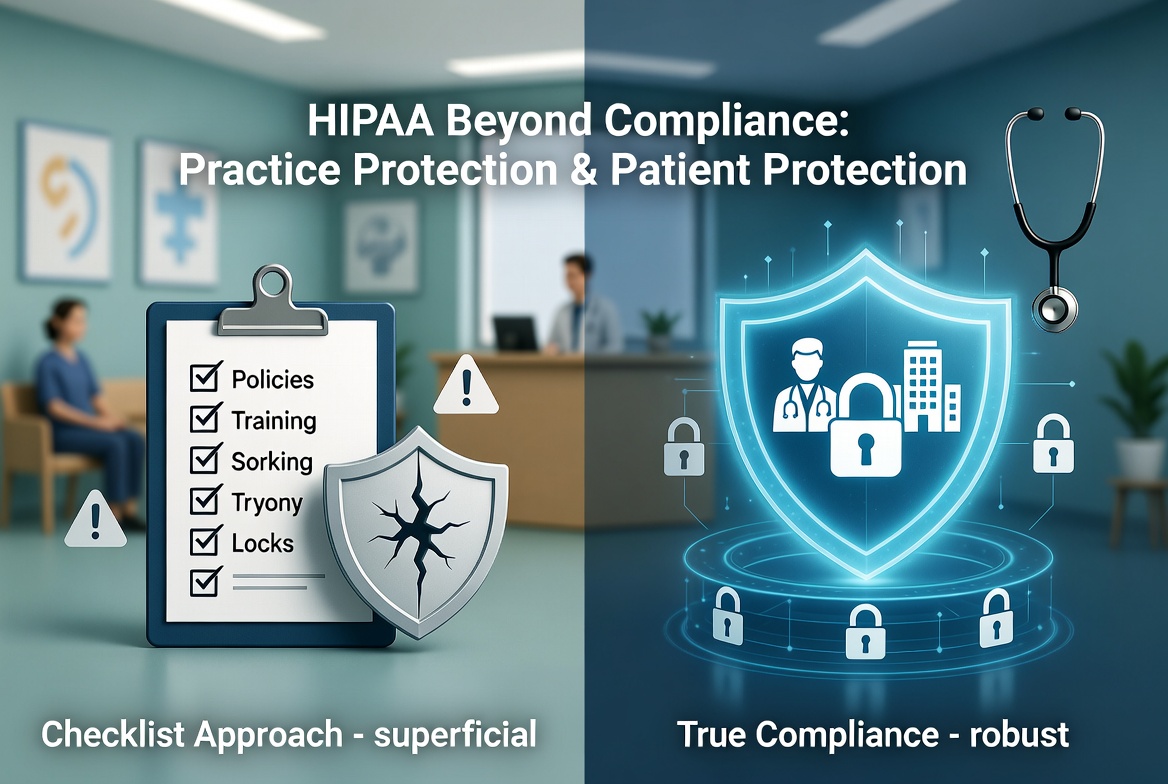
Many practitioners view HIPAA as a compliance checklist. They sign forms, complete training, and check boxes. This mindset weakens compliance and patient protection. HIPAA reflects the privacy and security principles that support quality patient care. These principles matter whether the law requires them or not. HIPAA compliance goes beyond checking off a list. Strong compliance creates a culture of privacy, security, and accountability. Organizations should strengthen their security programs now. Do not wait for stricter Security Rule requirements to be finalized before taking action. Patients entrust you to protect their privacy.
Patient Protection:
Trust as a prerequisite. Patients who fear disclosure often withhold important health information. This includes mental health, substance use, sexual health, and HIV status. Incomplete information can lead to inaccurate diagnoses and treatment decisions. Strong privacy protections build trust and encourage honest communication. Better communication leads to better clinical outcomes.
Preventing downstream harm. Cybersecurity is now viewed as a patient safety issue, not just an IT responsibility. PHI exposure doesn’t merely embarrass, it causes measurable injury: loss of employment, insurance discrimination, damaged relationships, domestic violence risk (particularly relevant when an abuser shares a health plan), and in some cases physical danger. Healthcare providers protect patients by securing their information and handling it responsibly.
Continuity of the relationship. Unauthorized disclosures can permanently damage patient trust. Even well-intentioned disclosures can weaken the patient-provider relationship. Patients who lose trust often delay or avoid needed care. Strong privacy protections support lasting relationships and better patient outcomes.
Practice Protection:
Breach costs are severe and compounding. OCR penalties range from $145 to $73,011 per violation, with annual caps reaching over $2 million per violation category. More damaging is the breach notification requirements, mandatory corrective action plans, and reputational exposure that affects patient volume and referral networks. A single ransomware incident or misdirected fax can trigger all of these simultaneously.
Breach exposure expands with data failures. A breach that causes patient harm creates dual liability, regulatory and civil. HIPAA does not offer a patient right of action; however, plaintiffs’ attorneys increasingly treat PHI mishandling as evidence of systemic negligence, not merely a technical violation. It colors how a jury perceives the entire standard of care and imposes high settlements during a class action lawsuit.
Third-party relationships. Business Associate Agreements exist because your liability extends through your vendors. A practice that doesn’t rigorously manage BAAs inherits risk from EHR vendors, billing services, and cloud storage providers. Ignorance of a downstream breach is not a defense. Business associates are increasingly being held to the same security expectations as covered entities.
Ethical Compliance Frameworks Often Miss:
HIPAA did not create patient confidentiality. It established enforceable standards for an existing ethical duty. The Hippocratic Oath, AMA ethics, and medical ethics frameworks all recognize confidentiality as a core responsibility.
HIPAA transforms that responsibility into specific, measurable, and auditable requirements. Many organizations treat HIPAA compliance as the finish line instead of the starting point. This approach creates unnecessary compliance and ethical risks. The Minimum Necessary Standard reflects more than a legal requirement. It requires staff to access only the information needed for legitimate purposes. This standard supports both patient privacy and ethical decision-making.
Practices that embrace this principle build stronger compliance programs. They also earn greater patient trust than organizations that simply check compliance boxes.
The Practical Mixture:
A practice that treats HIPAA as necessary and not merely required will:
- Build patient relationships capable of supporting honest clinical communication
- Reduce liability exposure across both regulatory and civil channels
- Establish vendor and staff accountability structures that prevent the most common breaches (insider access, phishing, improper disposal)
- Operate with a defensible standard of care in the event of litigation
The law exists. But the reasons to comply existed before it, and they matter more.
For organizations following HIPAA closely, the message from regulators and industry experts is clear: maintaining a written, well-documented compliance program with strong cybersecurity controls is becoming the baseline expectation, not a best practice. One of the main enforcement requirements is that of a Risk analysis as a starting point. Then must be updated as technology and staff changes.
Protect Your Organization Before It’s Too Late
HIPAA compliance isn’t a one-time project; it’s an ongoing process. At Aris Medical Solutions, our HIPAA Keeper™ system simplifies compliance with a cloud-based platform that walks you through each requirement, step by step. From risk analysis to training and documentation, you’ll have everything you need to stay protected, compliant, and audit ready.

Protect your practice — and your patients.
Schedule a free HIPAA checkup today at Aris Medical Solutions. Your HIPAA Compliance Officer will have a HIPAA security analyst to guide and assist them every step of the way.